


 Mayo Clinic Creates Free 3D-Printed SpineSurgery Simulator for Medical Training
梅奥诊所免费提供3D打印脊柱手术模拟器用于医学培训
作者:Vanesa Listek
The ongoing COVID-19 pandemic has demandedan unprecedented response from healthcare systems around the world. And to overcome the visible impact caused by the disease, the medical field is heavilyrelying on 3D printing technologies, digital trends, telehealth, artificialintelligence, and robotics. If crises can accelerate innovation andcollaboration, then this pandemic has proven that innovators from a wide rangeof fields, working together to confront the outbreak, will play a critical rolein enabling the breakthroughs needed for humanity to advance.
COVID-19的大流行,要求世界各地的医疗系统做出前所未有的快速反应。为了战胜疫情,医学领域将更加依赖3D打印、远程医疗、人工智能和机器人技术。危中有机,如果这次危机能够加速创新和合作,那么这场“大流行”将证明,来自不同领域的创新者,齐心协力对抗疫情,将在医学技术突破方面发挥重要作用。
As part of their continuing efforts toshare knowledge, a team of experts at the 3D printing lab at Mayo Clinic’sDepartment of Neurosurgery—the B.R.A.I.N. (Biotechnology Research andInnovation Neuroscience) Laboratory—have created the first open-access,3D-printed simulator for resident and medical student education in spinalanatomy and pedicle screw placement.
分享知识一直是梅奥医学中心的愿景,梅奥医学中心神经外科的3D打印实验室(B.R.A.I.N,生物技术研究和创新神经科学实验室)的专家们已经为住院医师和医科学生在脊柱解剖与椎弓根螺钉固定方面的教学,设计了第一个开源的3D打印模拟器。
Also known as SpineBox, the simulatordesign can be 3D printed on any desktop device, has a total cost of under 10dollars, can be disseminated to neurosurgical and orthopedic residents trainingin spinal surgery to continue their practice during the current operativefurlough, and the STL file can be downloaded for free at the Autodesk Online Gallery,or by following the linkhere.
Mayo Clinic Creates Free 3D-Printed SpineSurgery Simulator for Medical Training
梅奥诊所免费提供3D打印脊柱手术模拟器用于医学培训
作者:Vanesa Listek
The ongoing COVID-19 pandemic has demandedan unprecedented response from healthcare systems around the world. And to overcome the visible impact caused by the disease, the medical field is heavilyrelying on 3D printing technologies, digital trends, telehealth, artificialintelligence, and robotics. If crises can accelerate innovation andcollaboration, then this pandemic has proven that innovators from a wide rangeof fields, working together to confront the outbreak, will play a critical rolein enabling the breakthroughs needed for humanity to advance.
COVID-19的大流行,要求世界各地的医疗系统做出前所未有的快速反应。为了战胜疫情,医学领域将更加依赖3D打印、远程医疗、人工智能和机器人技术。危中有机,如果这次危机能够加速创新和合作,那么这场“大流行”将证明,来自不同领域的创新者,齐心协力对抗疫情,将在医学技术突破方面发挥重要作用。
As part of their continuing efforts toshare knowledge, a team of experts at the 3D printing lab at Mayo Clinic’sDepartment of Neurosurgery—the B.R.A.I.N. (Biotechnology Research andInnovation Neuroscience) Laboratory—have created the first open-access,3D-printed simulator for resident and medical student education in spinalanatomy and pedicle screw placement.
分享知识一直是梅奥医学中心的愿景,梅奥医学中心神经外科的3D打印实验室(B.R.A.I.N,生物技术研究和创新神经科学实验室)的专家们已经为住院医师和医科学生在脊柱解剖与椎弓根螺钉固定方面的教学,设计了第一个开源的3D打印模拟器。
Also known as SpineBox, the simulatordesign can be 3D printed on any desktop device, has a total cost of under 10dollars, can be disseminated to neurosurgical and orthopedic residents trainingin spinal surgery to continue their practice during the current operativefurlough, and the STL file can be downloaded for free at the Autodesk Online Gallery,or by following the linkhere.
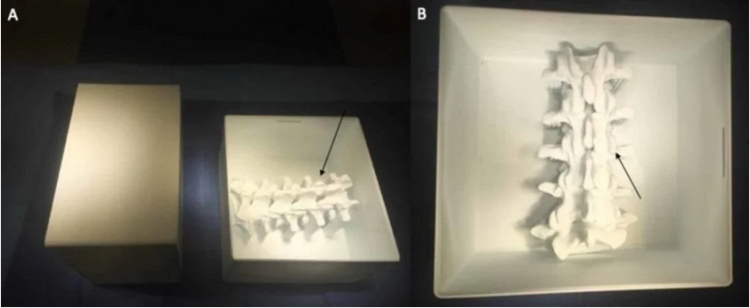 该模拟器被称为“SpineBox”,可以在任何桌面级3D打印机上进行打印,成本不到10美元,可以发给接受过脊柱外科手术培训的神经外科和骨科住院医师,以便在休术期间继续他们的实践,而STL文件可以在Autodesk在线图库免费下载,或者通过此链接下载。https://gallery.autodesk.com/projects/147986/assets/520762/embed
The creators of SpineBox and co-founders of B.R.A.I.N., William Clifton, a neurosurgery resident at the Mayo Clinic inFlorida, and Aaron Damon, a researcher and lab specialist at the SimulationCenter at the Mayo Clinic, recently published a paper in Cureus describing theprocess behind their development, as well as its uses in anatomical educationand training for pedicle screw placement in the lumbar region of the spine.
SpineBox的设计者和B.R.A.I.N的共同创始人,威廉克利夫顿Willian Clifton,同时也是一位佛罗里达梅奥医学中心的神经外科住院医师,和亚伦达蒙——一位梅奥医学中心模拟中心的研究员和实验室专家,两人近期在Cureus上发表了一篇论文,论文描述了他们的研发过程,以及SpineBox在脊柱腰椎椎弓根螺钉固定的解剖学教育和训练中的应用。
该模拟器被称为“SpineBox”,可以在任何桌面级3D打印机上进行打印,成本不到10美元,可以发给接受过脊柱外科手术培训的神经外科和骨科住院医师,以便在休术期间继续他们的实践,而STL文件可以在Autodesk在线图库免费下载,或者通过此链接下载。https://gallery.autodesk.com/projects/147986/assets/520762/embed
The creators of SpineBox and co-founders of B.R.A.I.N., William Clifton, a neurosurgery resident at the Mayo Clinic inFlorida, and Aaron Damon, a researcher and lab specialist at the SimulationCenter at the Mayo Clinic, recently published a paper in Cureus describing theprocess behind their development, as well as its uses in anatomical educationand training for pedicle screw placement in the lumbar region of the spine.
SpineBox的设计者和B.R.A.I.N的共同创始人,威廉克利夫顿Willian Clifton,同时也是一位佛罗里达梅奥医学中心的神经外科住院医师,和亚伦达蒙——一位梅奥医学中心模拟中心的研究员和实验室专家,两人近期在Cureus上发表了一篇论文,论文描述了他们的研发过程,以及SpineBox在脊柱腰椎椎弓根螺钉固定的解剖学教育和训练中的应用。

The use of polyurethane foam for soft tissue simulation as in a live operative scenario
聚氨酯泡沫在软组织模拟中的应用,让使用者像在真实手术场景中身临其境
为了增强教育体验,团队决定通过设计一个软屏障来复制人体皮肤软组织结构,这样医学生就不会直接看到脊椎模型,从而提供一个拟真的外科手术环境,使他们能够在更贴近现实的条件下操作。为了实现这个目标,他们需要切割柔性室内装饰聚氨酯泡沫片,以适应模拟器外壳盒的尺寸(17.6 x 18.6厘米)。组装完成后,受训者用手术刀切开泡沫片,并使用手术牵开器模拟切口后软组织的分离后,可以让学生们看到手术腔,非常逼真。 As described in the paper, Clifton and Damon have already begun using CAD design and 3D printing at the Mayo Clinic, in Jacksonville, to construct SpineBox simulators, which are also disposable and able to replicate the cortico-cancellous interface for pedicle screw placement. 正如论文所述,克利夫顿和达蒙已经开始在杰克逊维尔的梅奥诊所使用CAD和3D打印技术来制作“SpineBox”模拟器,模拟器是一次性的,能够复制用于椎弓根螺钉固定手术的皮质-松质骨界面。 The primary learning goal of the simulator was to instruct junior neurosurgical trainees in the anatomy and technique for pedicle screw placement in the lumbar spine. As stated in the study, they have already 3D-printed 10 SpineBox models for training, which were used to place a total of 100 pedicle screws in 50 lumbar levels. 模拟器的主要目标是培训初级神经外科受训者在腰椎椎弓根螺钉固定上的的解剖学技术。如论文中所述,团队已经3D打印了10个SpineBox用于训练,用于在50个腰椎位置放置总共100个椎弓根螺钉。 The pedicle screws of the 3D-printed lumbar vertebrae can be seen within the model after being placed and graded based on location for both teaching and objective skill assessment
3D打印的腰椎椎弓根螺钉在进针后可以被观察,可以根据进针点和放置水平进行评分
3D printing has already proven to be atechnology that can provide the means to recreate key points of anatomy foranatomical and procedural learning. This is especially true in the realm ofspinal surgery, as with Clifton and Damon’s original Biomimetic Human TissueSimulators, another training model they developed to help hundreds of medicalresidents improve their skills. Furthermore, as many institutions around theworld continue to acquire desktop 3Dprinters, they will need more open-access and cheap simulator designs that donot require purchase or extensive assembly. 3D打印已经被证明,是一种可以为解剖学和流程学习提供重建解剖学关键点的技术。在脊柱外科领域尤其如此,就像克利夫顿和达蒙初始的仿生人体组织模拟器一样,这是他们开发的另一种训练模型,旨在帮助数百名驻院医生提高技能。此外,随着世界各地的许多机构相继购买3D打印机,医疗人员将需要更多开源和廉价的模拟器设计。 The SpineBox simulator represents theresult of many years of research focused on innovation in healthcare education.In addition, it can change the way medical schools prepare physicians for thedemands of the future, especially as hospitals and procedures continue toundergo changes in the era of the pandemic. SpineBox模拟器代表了多年来专注于医疗保健教育创新的研究成果。此外,它还能改变医学院培养医生应对未来需求的方式,在新冠大流行时代这尤其重要,因为医院和医疗程序在不断发生变化。 Clearly committed to using 3D printing torevolutionize the way surgeons are taught, Clifton and Damon continue tosurprise us with their improved designs and free-access delivery of simulatorsto any institution around the world that needs them, surely, many will takeadvantage of this new development. 克利夫顿和达蒙致力于利用3D打印技术来彻底改变外科医生的教学方式,更让我们惊叹的是,他们不断改进设计并向世界上任何需要模拟器的机构免费提供。 文章来源:https://3dprint-com.cdn.ampproject.org/c/s/3dprint.com/268185/mayo-clinic-creates-free-3d-printed-spine-surgery-simulator-for-medical-training/amp/

